The Big Bald Banding Station, located on the North Carolina-
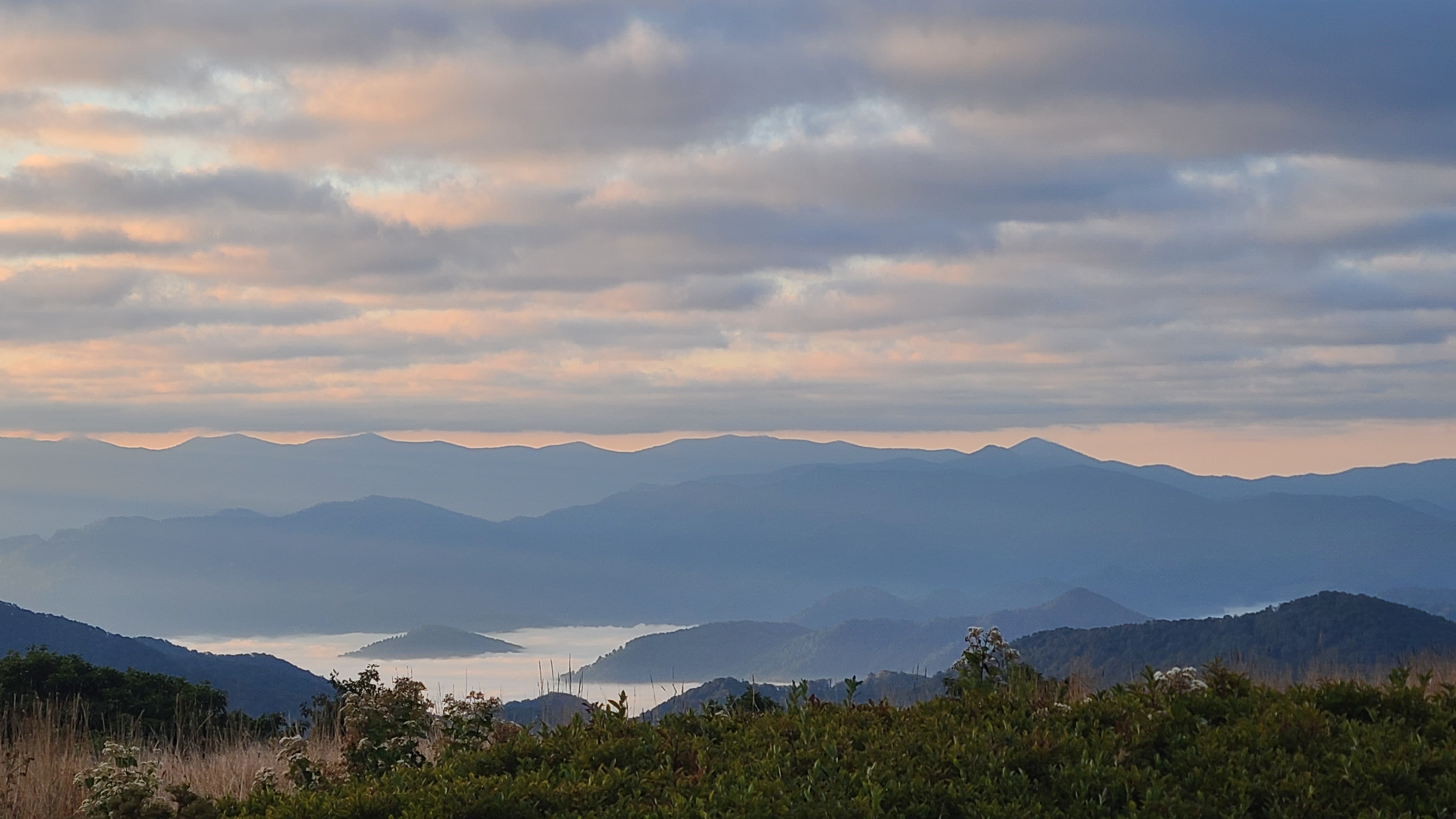
Tennessee border in Cherokee National Forest along the Appalachian Trail Corridor, is Blue Ridge Bird Observatory’s most productive research site. Avian banding began here in 1978 with Dr. George and Cleo Mayfield, leading to the establishment of the current station, operated by BRBO for the past 15 years. Its high elevation (5,390 feet) and location within hardwood forest edge habitat next to a grassy bald support data collection throughout breeding, migration, and overwintering seasons. Big Bald is recognized as an Important Bird Area (IBA) by the Tennessee Wildlife Resources Agency and National Audubon Society, along with other high-elevation Southern Appalachian sites. BRBO’s work here includes songbird and raptor banding, hawkwatch counts, and Northern Saw-whet Owl nest box monitoring.
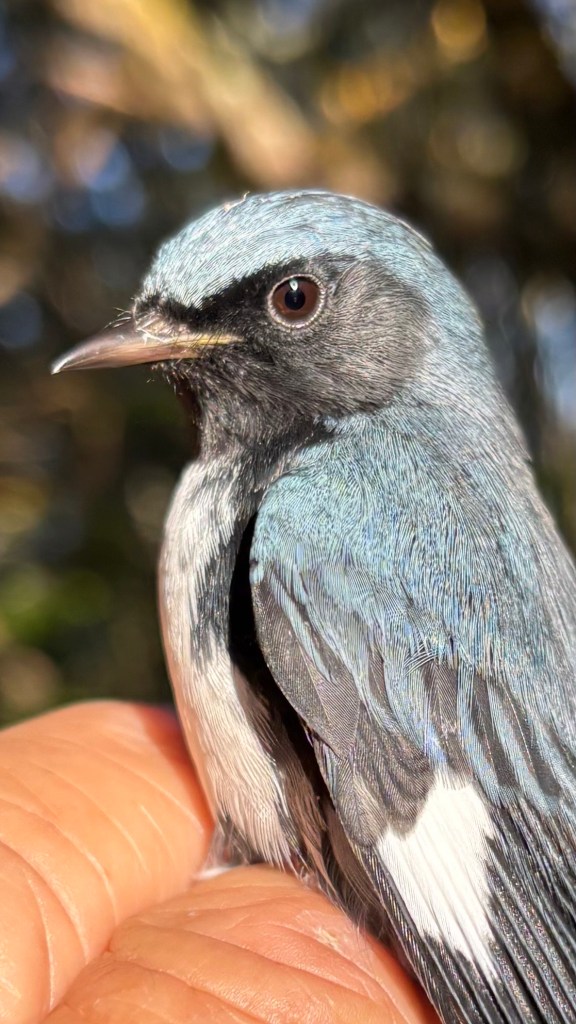
As summer shifts to autumn, BRBO transitions from MAPS (Monitoring Avian Productivity and Survivorship) banding to migration banding. MAPS occurs May–July during the breeding season, while migration banding runs September– November as birds head south. MAPS operates every ten days from dawn to noon, but migration banding runs all day, every day due to the higher volume of birds. In both seasons, birds are captured in mist nets, assessed, banded with a unique aluminum ID, and released. MAPS focuses on breeding habitat and survival data, while migration banding tracks migratory routes. Both efforts contribute to population and conservation research.
At Big Bald, around 2,000 songbirds are banded each fall as they migrate from northern breeding grounds to the Neotropics. BRBO also bands about 100 raptors yearly, including Peregrine Falcons, Cooper’s Hawks, Red-tailed Hawks, Broad-winged Hawks, Merlins, and others. Hawkwatch efforts involve counting and identifying raptors from the summit, with about 3,000 individuals of 15 species observed each fall. Due to the station’s busy season, volunteers are encouraged to assist.
To get involved, email bigbaldbanding@gmail.com.
HOT SPRINGS BANDING STATION VISITOR DAYS
OCTOBER 4TH
OCTOBER 12TH
OCTOBER 25TH
RVSP HERE
VOLUNTEERS NEEDED
Looking for skill-building
opportunities?
Want to contribute to local
conservation efforts?
Love birds?
Volunteer with Blue Ridge Bird
Observatory this banding season.
Contact bigbaldbanding@gmail.com
and check out our calendar for more information.
CATERPILLARS COUNT! SURVEYS SHOWCASE THE FOOD WEB AT
THE HOT SPRINGS BANDING STATION

Station site.
Caterpillars Count! is a citizen science project
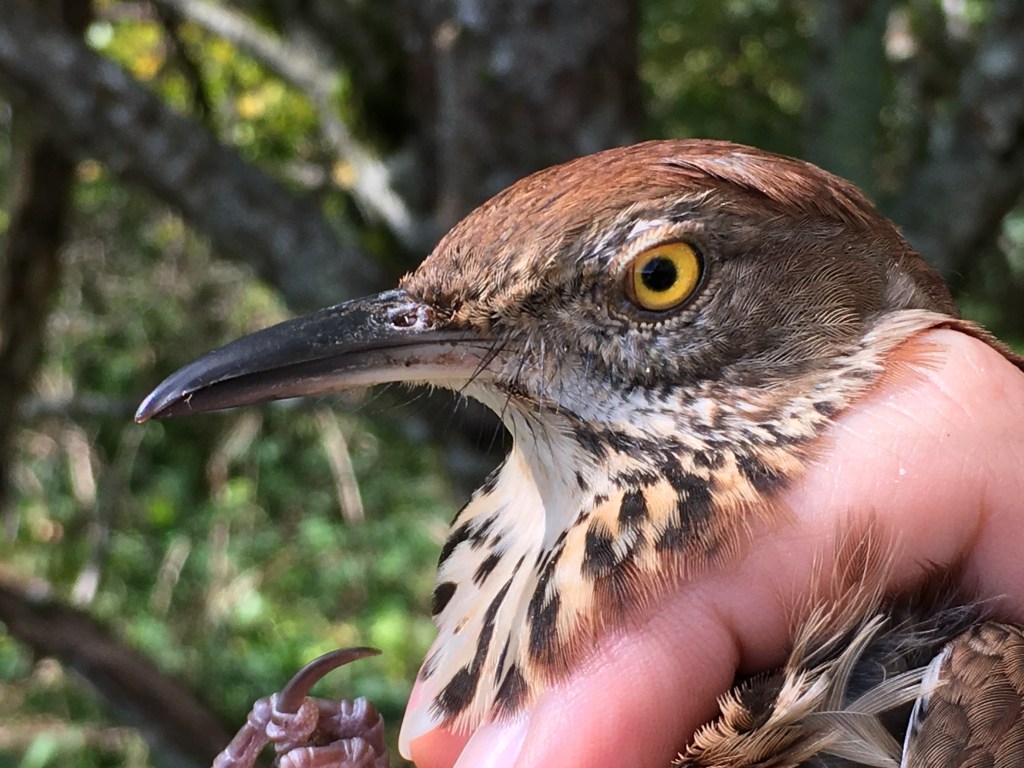
from the University of North Carolina that collects data on insect diversity, abundance, and seasonality. This information reveals key trends in the insect and arthropod populations that are critical food sources for many bird species. For the Hot Springs Banding Station’s first year of operation, BRBO implemented the Caterpillars Count! protocol during the MAPS banding season, aiming to better understand the site’s foraging landscape.
Participants tagged tree and shrub limbs to assess leaf size/count, herbivore damage, and insect presence. During surveys, a beat sheet was placed under each limb and struck with a stick to dislodge insects and other arthropods. These organisms were then counted and measured after falling onto the sheet. BRBO surveyed 25 trees and shrubs near mist nets at the Hot Springs Banding Station. In June and July, BRBO staff and volunteers recorded 251 arthropods. Arachnids such as spiders, daddy long-legs, and ticks were most common (83),followed by ants (41), beetles (38), and flies (29). Less common finds included stoneflies, springtails, barklice, and a single mayfly. Located in successional forest along the French Broad Corridor, the site supports rich biodiversity across plants, insects, and birds within a complex food web.
To join the effort and explore the ecology in your own backyard, visit the Caterpillars Count! website.
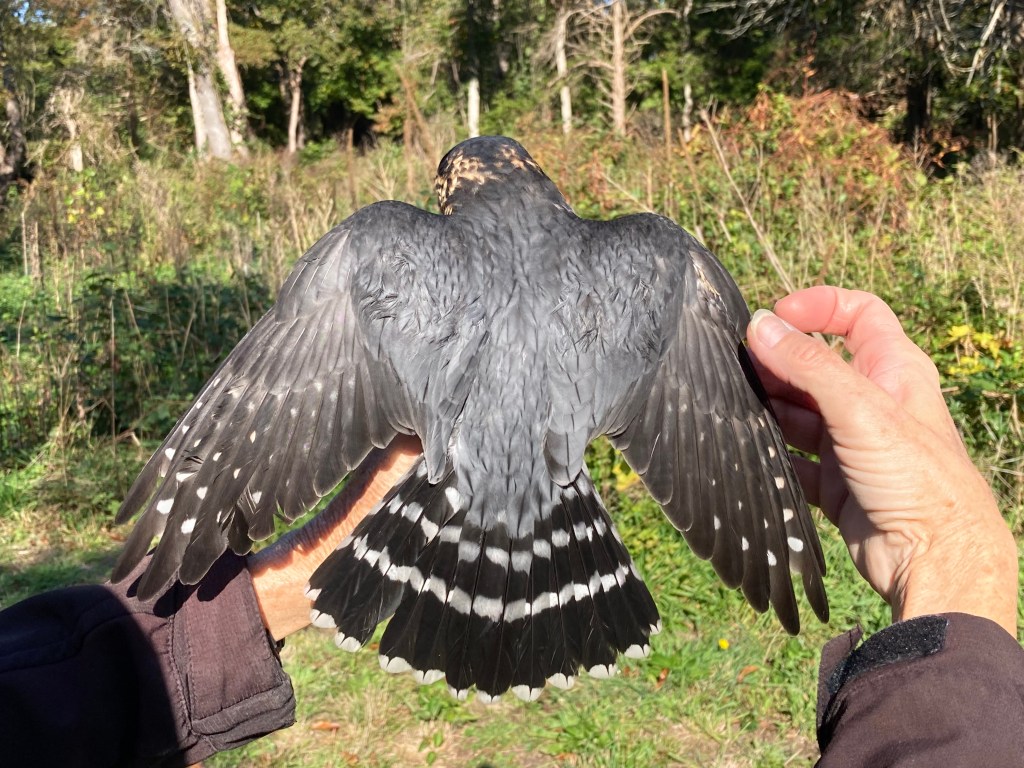
MEET THE MERLIN: A UNIQUE GUEST TO THE BIG BALD BANDING STATION
Latin name: Falco columbarius
Diet: birds and small mammals
Nesting: Treetops
Habitat: Forests
Merlins are small but powerful falcons that, while similar in length to American Kestrels, are denser and heavier. These compact raptors are fast-flying predators of small birds, often hunting flocks and capturing prey mid-air. Common prey include shorebirds, songbirds, and pigeons. In Medieval Europe, falconers used Merlins to hunt Skylarks. Sometimes called “lady hawks”, Merlins were favored by noblewomen such as Mary Queen of Scots and Catherine the Great.
Nine subspecies of Merlin live across the Northern Hemisphere. In North America, three subspecies breed in Canada and overwinter in the U.S. Rather than building their own nests, Merlins reuse those abandoned by other raptors or crows. Both sexes share in raising young, and nest productivity has increased since the ban on DDT, a pesticide that once weakened raptor eggshells and devastated populations. Merlins are becoming more common thanks to their recovery and the abundance of house sparrows in urban areas. Still, they remain uncommon in Western North Carolina. Birders are most likely to spot them in colder months at high elevations. It’s a special event when biologists and volunteers at Big Bald Banding Station get to band and observe Merlins during their migration to overwintering sites.

BLUE RIDGE BIRD OBSERVATORY NEEDS YOU
CONTRIBUTE TO BRBO’S MISSION BY DONATING HERE
Blue Ridge Bird Observatory is dedicated to the conservation and protection of birds in the southern Appalachians through monitoring, education, and field research.
P.O. Box 305. Mars Hill, NC 28754