HOT SPRINGS
BANDING STATION
VISITOR DAYS
June 22nd
July 5th
July 26th
RVSP HERE
BANDING STATION UPDATES
Our MAPS stations at Hot Springs, Highlands, and Big Bald are off to a strong start for the 2025 season. At Hot Springs, we’ve already banded 18 species, including Northern Cardinals, Indigo Buntings, Yellow-Breasted Chat, and a Ruby-throated Hummingbird. Notable recaptures include multiple Louisiana Waterthrush and Indigo Buntings, indicating strong site fidelity. With banding days getting busier, we’re
actively seeking volunteers to assist at this high-activity station.
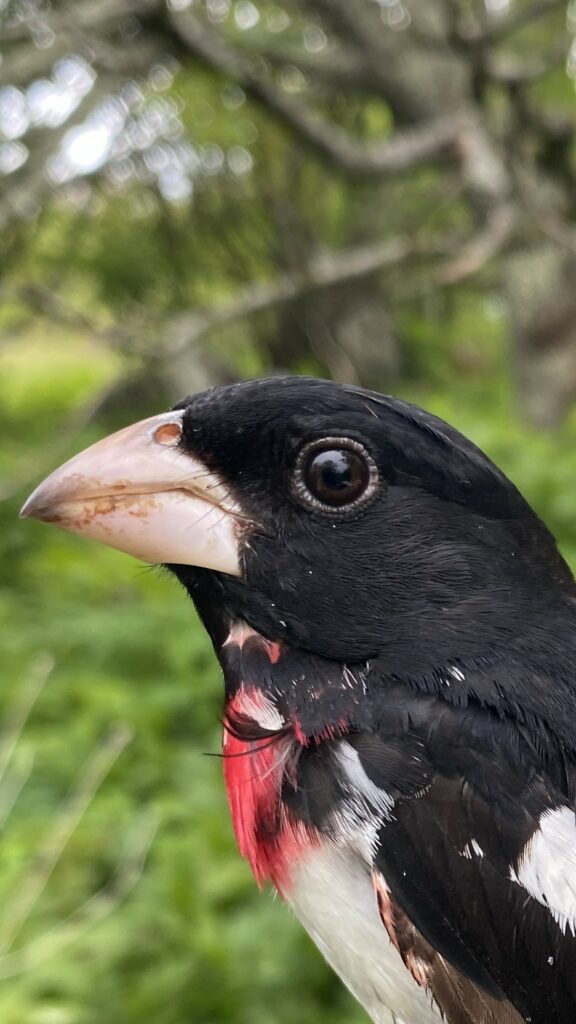
Highlands has been rich with documentations of Carolina Chickadees, Gray Catbirds, White-Breasted Nuthatches, and multiple recaptured American Robins and Dark-eyed Juncos. Big Bald just launched its season, and we’ve already had early captures of Dark-Eyed Juncos, a Rose-Breasted Grosbeak and
a Broad-Winged Hawk.
On Wednesday, May 14th, a group of 30 middle school students from Woodson Branch Nature School traveled to Blue Ridge Bird Observatory’s Hot Springs Banding Station to learn about the process of bird banding and its connection to agriculture and land use. During their visit, students practiced spotting and observing birds using binoculars, participated in a relay-race designed to demonstrate the connection between beak shape and diet, and tagged along with professional banders as they checked nets and documented birds.
To participate in similar hands-on educational activities, visit the Hot Springs Banding Station on River Road during one of our visitor days listed above.

WREN CENTER HOSTS SECOND ANNUAL BIOBLITZ
On Saturday June 7th, the WREN Center hosted their second annual BioBlitz out of the Laurel Community Center. This event brought together experts, naturalists, and volunteers with the shared goal of identifying as many unique species as possible. Birders set out across multiple habitats throughout the Laurel River watershed to observe and record the area’s local bird communities. This team’s collective efforts resulted in the documentation of 330 individual birds representing 60 unique species. Notable highlights from the day’s sightings included two dozen Red-eyed Vireos, 13 warbler species, three Swainson’s Warblers, and a single Brown Creeper.
MEET THE INDIGO BUNTING: THE HOT SPRINGS BANDING STATION’S MOST FREQUENTLY DOCUMENTED SPECIES
Latin name: Passerina cyanea
Diet: Omnivorous
Nesting: Shrubs and low trees
Habitat: Brushy areas
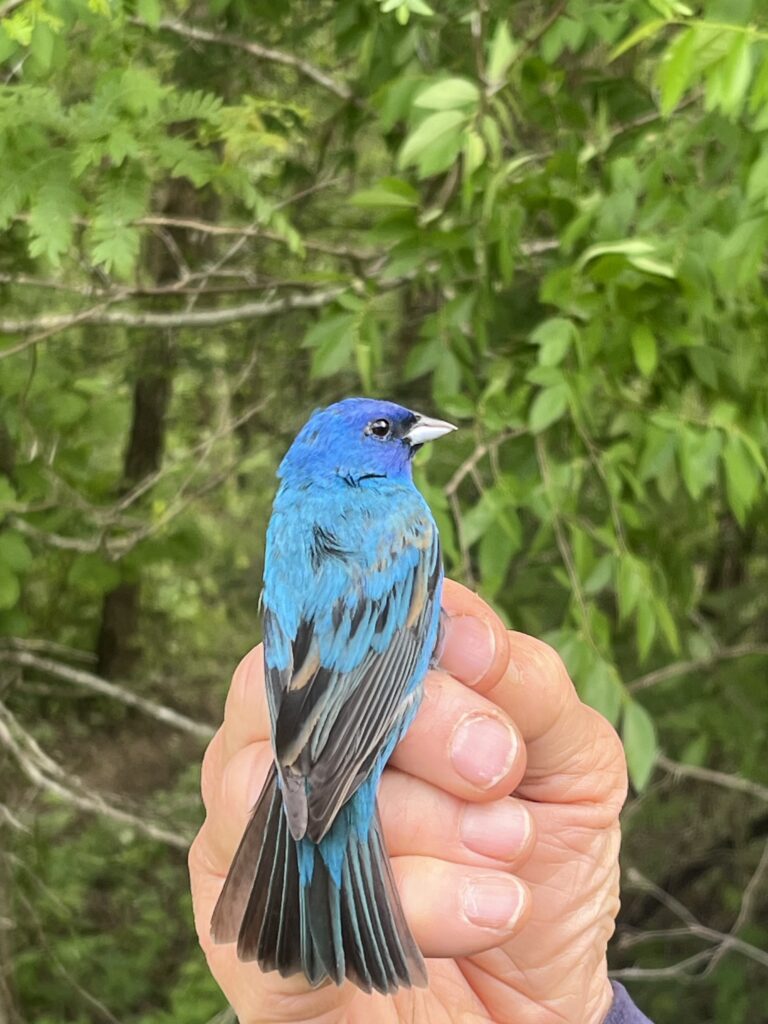
The bright iridescent blue breeding plumage of male Indigo Buntings is hard to miss among the summer foliage of the weedy habitats this species frequents. In some parts of the Eastern United States, Indigo Buntings may be the most common songbird, as they thrive in successional ecosystems where woody shrubs reclaim areas previously cleared by humans. With this habitat preference, it is not surprising that Indigo Buntings have thus far been the most banded bird species at BRBO’s new Hot Springs Banding Station, which operates on retired farmland in a riparian zone of the French Broad. Despite being common to the area, the Indigo Bunting’s brilliant coloration makes them a popular species among birding communities. As in all blue- colored birds, Indigo Bunting plumage does not contain true blue pigmentation. Instead, their appearance is a result of the way the structure of their feathers reflect light. Females, immature males, and non-breeding males lack this structural coloration and are mostly brown.
BROOD XIV’S EMERGENCE PROVIDES A SEASON-LONG BIRD BUFFET
Over the last couple of months, residents of the Eastern United States have become well-acquainted with the 17-year periodical cicada species that make up Brood XIV. Brood XIV is one of the largest cicada broods, and its presence has filled the air with near- constant noise and provided a once-in-a-lifetime feast for insectivorous birds. When these broods emerge, many bird species shift their diets to focus on the abundant cicadas, which temporarily reduces predation on other insects and allows herbivorous populations to grow unchecked and increase consumption of host plants. Additionally, the deafening mating calls of cicadas can interfere with bird songs in shared breeding grounds, potentially affecting the reproductive success of certain bird species.

LOCAL HAPPENINGS
June 21st- MountainTrue Bioblitz at Hickory Nut Gap Farm
VOLUNTEERS NEEDED!
Looking for skill-building opportunities?
Want to contribute to local conservation efforts?
Love birds?
Volunteer with Blue Ridge Bird Observatory this banding season.
Contact bigbaldbanding@bigbaldbanding and check out our calendar for more information.